One operating record
Field, safety, quality, and equipment share evidence instead of separate tools.
We use essential cookies to run the site and optional cookies to improve your experience and measure usage. You can change your choice anytime in Cookie Preferences.
CONSTRUCTION OPERATIONS INTELLIGENCE · OPERATIONS HUB
Field Management, Daily Reports, Safety, Quality, Photos & Media, and Equipment run on one connected record — so what happens on site reaches job costing and executive review without re-keying.
One operating record for daily execution — evidence flows upstream without manual reassembly.
Product overview
Construction Operations Intelligence is the execution layer between award and closeout. Daily plans, field evidence, safety observations, quality inspections, photo documentation, and equipment status stay on a shared record instead of scattered spreadsheets and group chats.
Built for Superintendents, project engineers, safety and quality managers, and project executives.
Product proof
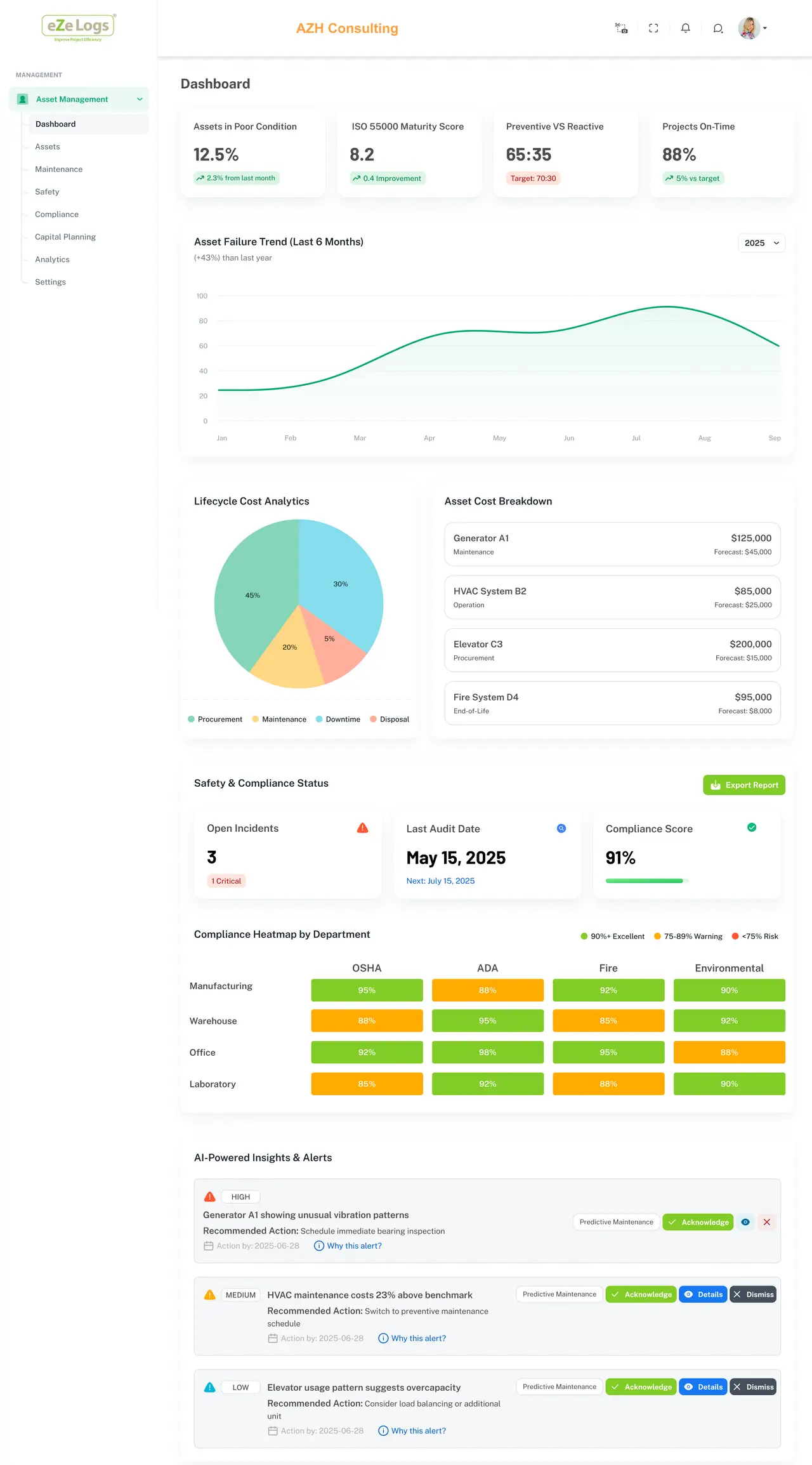
Field, safety, and quality status stay visible without pulling status from separate tools.
End-to-end workflow
One continuous family — current stage highlighted, full path visible.
Lifecycle position
FIELD TO EXECUTIVE
Daily Field list for assigned projects in the hosted workspace.
Project Dashboard and canonical RFI list and detail — Laravel remains the record authority.
Universal Search retrieves work. Needs Attention appears on verified surfaces.
Broader controls and document suites: contact us to confirm availability.
A fuller executive and portfolio suite is a future direction, subject to change.
Needs Attention on verified work surfaces — scoring completeness is not certified.
Understand-and-suggest surfaces exist in the architecture — confirm availability.
Unauthorized actions are denied. No autonomous execution.
Canonical RFI and Daily Field records stay on the work they support.
One project graph. One intelligence layer. Evidence retained.
Who uses this module
Plan the day, coordinate crews and subs, and keep the execution record current.
ExploreReview advisory observation and inspection signals without losing evidence context.
ExploreSee field evidence roll up into governed decisions without a status-report cycle.
ExploreDomains
AI ASSISTANCE — ADVISORY
Assistance across operations is advisory. Daily plans, safety actions, quality closures, and equipment decisions stay with the people accountable for them.
Inputs
Outputs
Connected modules
Field Management → Daily Reports → Safety → Quality → Photos & Media → Equipment & Assets → Job Costing → Executive Experience
Business outcomes
Field, safety, quality, and equipment share evidence instead of separate tools.
Plans, reports, and photos connect without manual reassembly.
Advisory signals reach the right role — decisions stay human.
Construction examples
Daily plans, subcontractor coordination, and photo evidence stay on one record for the superintendent.
A field observation moves through advisory review into a documented, human-approved corrective action.
Daily and inspection evidence roll into portfolio dashboards without a separate weekly report.
Evidence & governance
Consequential actions stay with accountable people and role-based controls.
Canonical RFI and Daily Field records remain on the work they support. Ezelogs does not introduce a second write authority.
Keyboard-operable surfaces, clear focus, and readable contrast across the public website.
Public pages stay available while investor-private materials remain access-controlled.
FAQ
No. AI assists with drafts and signals across field, safety, and quality workflows. Supervisors and managers approve consequential actions.
Daily reports, safety, and quality evidence continue into job costing and executive dashboards on the same governed record — no separate reporting cycle.
It sits between pre-construction award and post-construction closeout, and connects forward into job costing and executive review.
Related products & resources
Walk Field Management → Daily Reports → Safety → Quality → Equipment as one governed suite.